


What you can do
Try DNS filtering on one device before extending it to the household.
Filter DNS for one test client, inspect the query log and learn how to restore name resolution before changing the whole household network.
This is a third-party project, with its own host, release, maintenance and license conditions. Its features are separate from ZettOS native software.
App Center availability and installation route
Checked on 18 November 2026: Zettlab D6 · RK3588 · 16GB RAM · ZettOS 1.14.0. The complete App Center list showed 49 entries. This observation applies to that device and catalog snapshot.
Not observed in the checked App Center. This guide does not provide a confirmed one-click NAS installation. Check the manual or external-host arrangement below against the exact image, release, CPU architecture, runtime, resources and data requirements. Absence from this catalog does not establish that the application is unsupported.
Installation, application operation, hardware acceleration and recovery on this NAS remain untested. Official Docker instructions and persistence.
Choose the host and data paths
- Guide arrangement
- Conditional dedicated DNS container or external always-on Linux host; start with one client, not the router’s global DNS setting.
- NAS role
- May host a compatible container and its supported local data paths after checking the exact image, runtime and resource requirements; use the stated external-host alternative when needed.
- Host requirements
- DNS needs TCP and UDP port 53 on the chosen address. NAS web ports, existing DNS and host networking can conflict. The current official Docker guide requires host networking to retain original client IPs; bridge mode may log a shared gateway address instead.
- Device validation
- Not observed in checked App Center; reference deployment untested. Installation, hardware acceleration and recovery on a Zettlab device have not been tested.

Conditionally supported application host
Application-specific persistent data
Consistent state + independent backup
This application was not observed in the checked D6 / ZettOS 1.14.0 App Center. The manual or external-host reference below requires its own compatibility checks; this observation does not establish that it is unsupported.
For a separate supported project, ZettOS documents Docker → Projects → + Create and YAML paste/import. Manage App Center installations in App Center. Match the exact image, data paths, permissions and ports before deployment.
Before you start
- Reserve a stable host address and inspect port 53 plus the intended admin web port. Record the test client’s original DNS settings.
- Create two persistent directories for /opt/adguardhome/work and /opt/adguardhome/conf.
- Choose upstream resolvers and prepare a temporary custom rule for a harmless test domain; leave DHCP disabled for this first exercise.
Set up and use the reference arrangement
-
Start only the required listeners
Adapt the official image configuration with the two data mappings, plain DNS ports and the first-run setup port. Do not publish every optional DNS/DHCP protocol merely because it appears in a broad example.
-
Finish the setup wizard
Open the first-run service on port 3000, select the listening interfaces and admin credentials, then use the chosen normal admin address.
-
Point one client at it
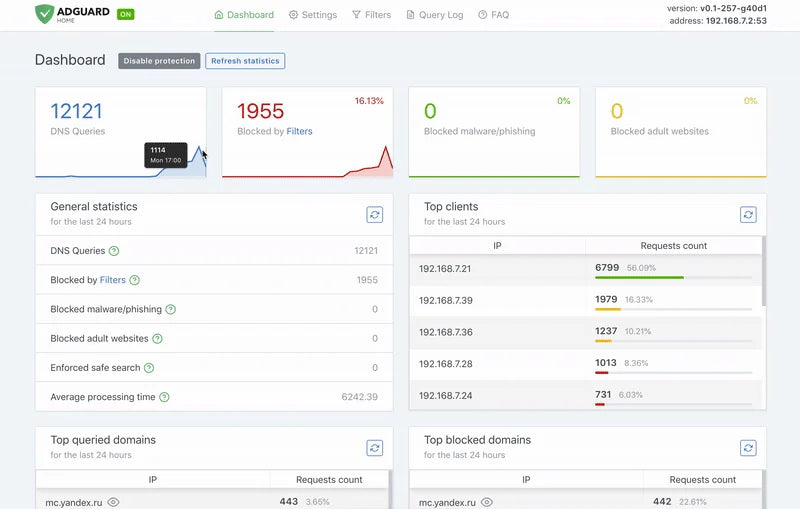
Change only the test computer or phone’s DNS to the service address. Issue a known lookup and find the query in the log; verify whether this deployment preserves the original client IP. Bridge networking can show a shared gateway instead of that client.
-
Check a reversible filter
Add the temporary custom filtering rule, query that name and confirm the blocked result. Remove the rule and verify resolution returns.
-
Practice interruption recovery
Stop the service briefly during a controlled test, restore the client’s previous DNS settings and confirm normal browsing. Document the actual household fallback before wider use.
Check the first useful result
Keep the complete application state
- /opt/adguardhome/conf, including AdGuardHome.yaml.
- /opt/adguardhome/work for working data required by the installation.
- The published-port/interface choices, upstreams and written client/router rollback settings.
Back up and bring it back
- Stop AdGuard Home before copying its conf and work directories; the running process can overwrite manual YAML edits.
- Restore both directories to a matching instance, check the listening address and port conflicts, then start it.
- Use only the test client to recheck a lookup, a filter rule and the fallback procedure before changing router-wide DNS.
Check limits and ongoing work
- DNS filtering cannot remove every advertisement or inspect arbitrary encrypted application content.
- A DNS outage on a shared NAS host can affect more than the NAS applications.
- Use the current AdGuard knowledge base rather than the outdated GitHub configuration wiki. Do not change the NAS host resolver, DHCP or router-wide DNS merely to complete the one-client test.
Review release notes before updating. Keep the matching configuration and a consistent pre-update recovery set; a database migration may require restoring data with the matching software rather than simply using an older image.
Confirm the project’s current license and the exact free or paid feature boundaries for your intended task. Self-hosting does not make external APIs, cloud destinations or separate compute free.
Add NAS storage if needed
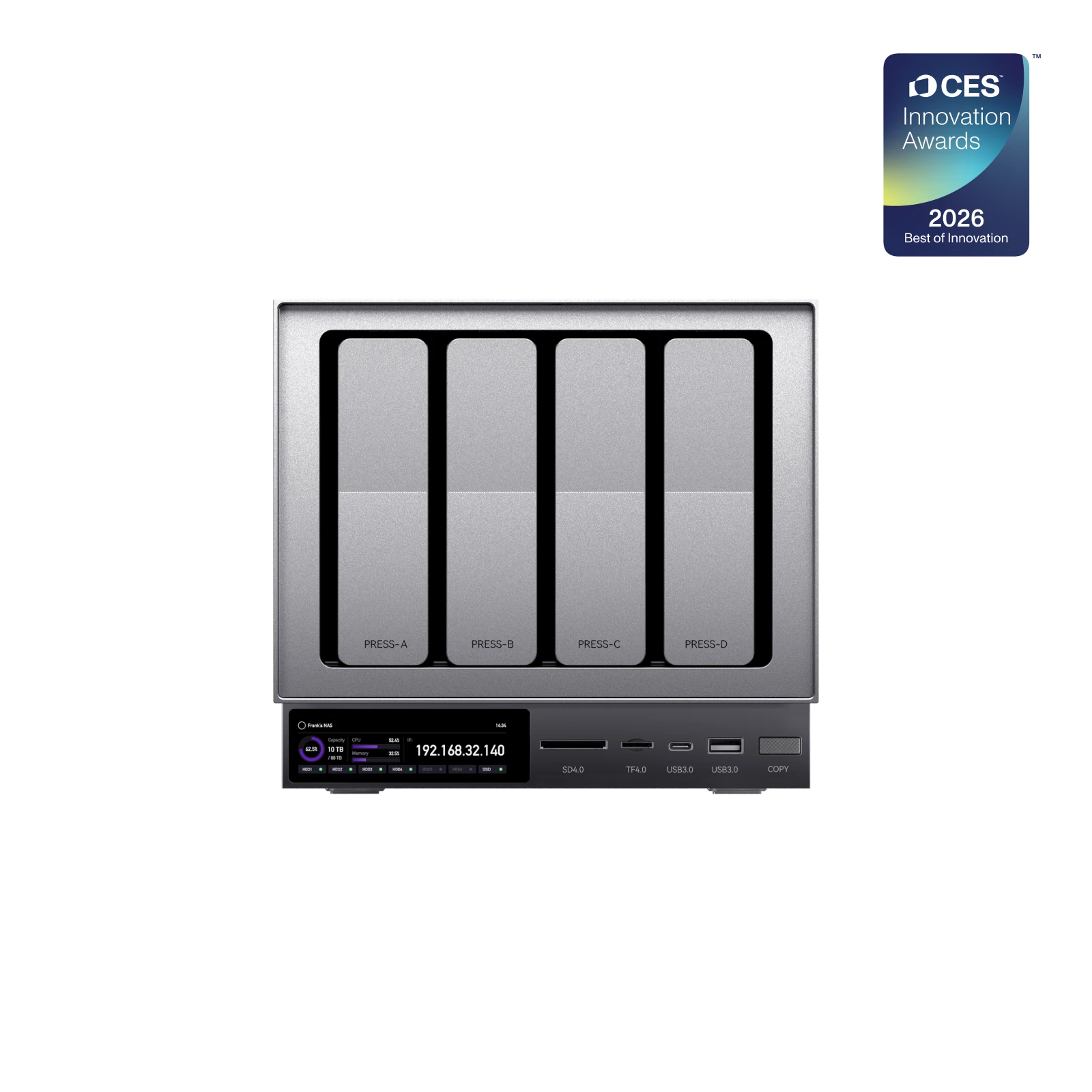
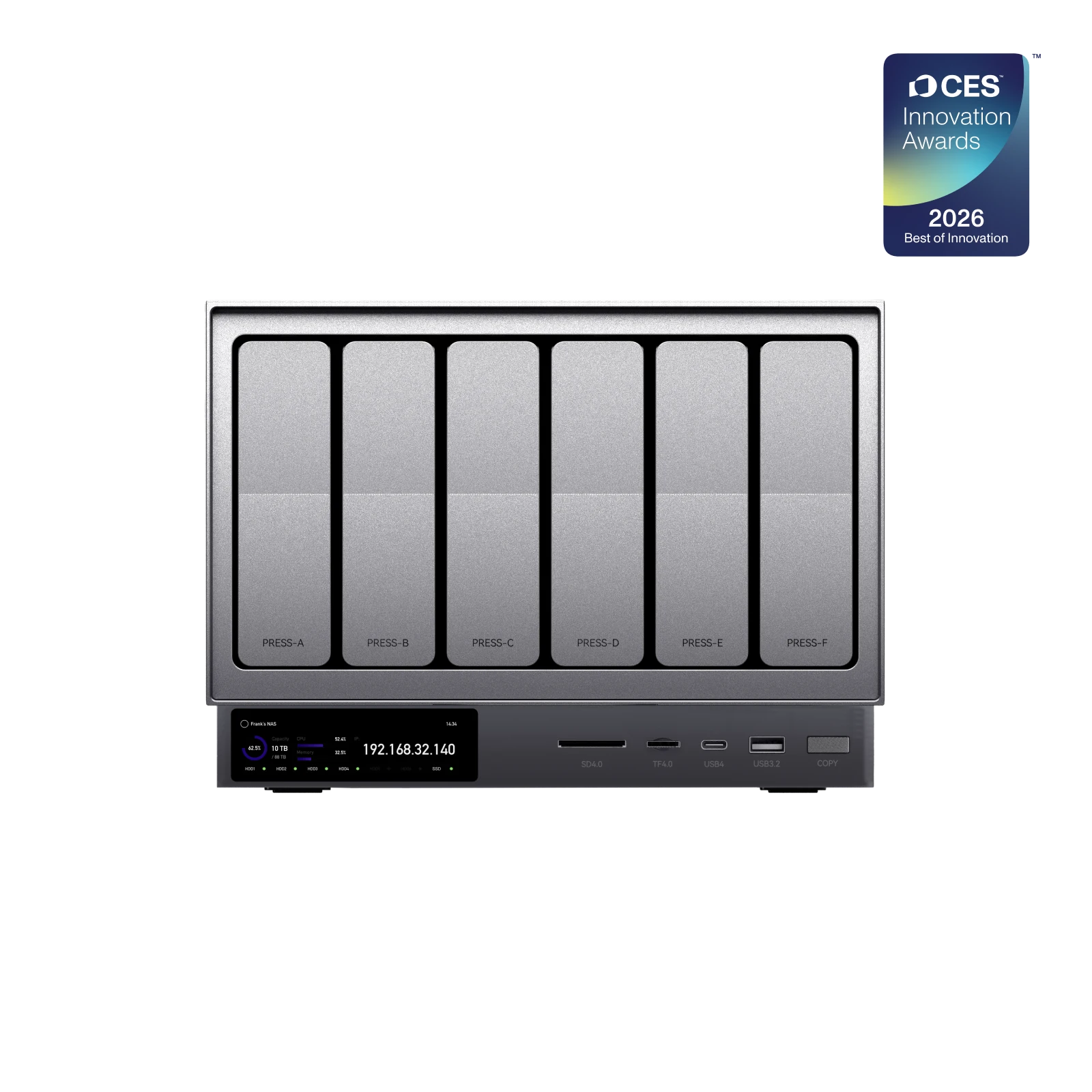
AdGuard Home does not itself require a multi-bay NAS. Choose D4 or D6 only if you also need shared file archives or independent backup destinations. Base drive bays on those files and their growth; application configuration and logs do not by themselves justify a larger enclosure. Check the supported service host and its resources separately.
- D4 · 4 SATA bays
- Compare a four-drive layout against the current archive, expected growth and independent recovery copy. See the D4.
- D6 · 6 SATA bays
- Compare a six-drive layout when more drive-bay capacity or a different growth plan is useful. More bays do not establish a faster application or network. See the D6.
- 8GB / 16GB RAM
- These are separate SKU choices on each product page. Confirm the selected release’s requirements and combined operating load; no application-specific memory recommendation has been device-tested here.
- Complete system cost
- Enclosures are diskless. Allow for compatible drives, independent backup storage and any external application host, paid features or service/API charges required by the task. Current prices and delivery belong on the product page.
Official references
- Official Docker instructions and persistenceDocumentation read 2026-11-18
- Current official getting-started knowledge baseDocumentation read 2026-11-18
- Current official Docker knowledge baseDocumentation read 2026-11-18
- ZettOS Docker Projects
For Home
Plan Useful Home Server Workflows
Read the guide
Basics