


What you can do
Create file snapshots and manage how long backup history is retained.
Use a desktop backup interface to create encrypted snapshots with explicit scheduling and retention, then restore an earlier version without replacing the live folder.
This is a third-party project, with its own host, release, maintenance and license conditions. Its features are separate from ZettOS native software.
App Center availability and installation route
Checked on 18 November 2026: Zettlab D6 · RK3588 · 16GB RAM · ZettOS 1.14.0. The complete App Center list showed 49 entries. This observation applies to that device and catalog snapshot.
Not observed in the checked App Center. This guide does not provide a confirmed one-click NAS installation. Check the manual or external-host arrangement below against the exact image, release, CPU architecture, runtime, resources and data requirements. Absence from this catalog does not establish that the application is unsupported.
Installation, application operation, hardware acceleration and recovery on this NAS remain untested. KopiaUI repository, policies and password.
Choose the host and data paths
- Guide arrangement
- KopiaUI on a computer + independent repository
- NAS role
- Act as a mounted source or a repository/destination according to the chosen direction. Keep the only source and only recovery copy in different failure locations.
- Host requirements
- The documented desktop workflow avoids assuming a ZettOS package. A NAS share can be a filesystem repository or a mounted source, but the source and only repository must not be the same failure location.
- Device validation
- Not observed in checked App Center; reference deployment untested. Installation, hardware acceleration and recovery on a Zettlab device have not been tested.

Supported computer / transfer host
NAS source or backup repository
Versioned / verified independent copy
This application was not observed in the checked D6 / ZettOS 1.14.0 App Center. The manual or external-host reference below requires its own compatibility checks; this observation does not establish that it is unsupported.
Before you start
- Install the official KopiaUI release for the computer and prepare a small source folder.
- Provision the repository first: a separate NAS share, external storage or supported cloud location with the needed credentials.
- Keep the repository password independently; official docs state it cannot be recovered if forgotten.
Set up and use the reference arrangement
-
Create the repository
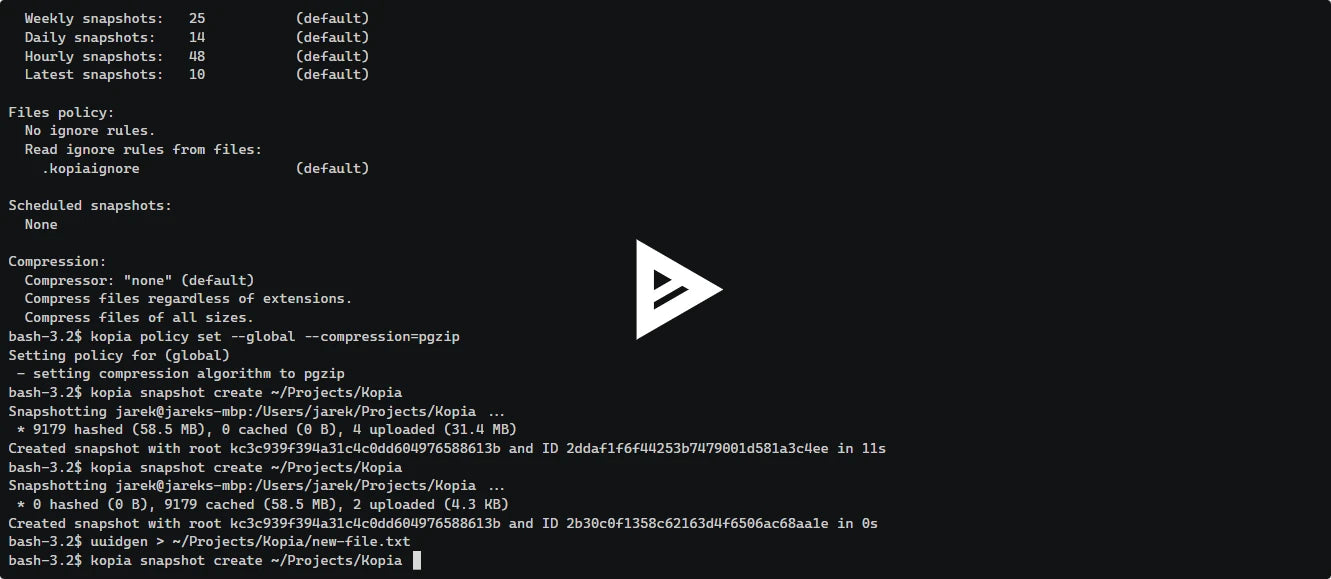
In KopiaUI choose the appropriate repository type. For a NAS destination choose Local Directory or NAS and enter the mounted repository path; supply the encryption password and finish repository creation.
-
Set one source policy
Use Policies to select the sample source directory. Set the snapshot schedule and retention that fit the experiment, save the policy and create the initial snapshot. If no Snapshot Frequency is set, automatic snapshots do not run: use Snapshots > Snapshot Now for the test.
-
Inspect versions
Edit and delete disposable sample files, make another snapshot and open the earlier snapshot’s directory view. Check that it contains the earlier versions you expect.
-
Recover into a clean folder
Use the snapshot’s restore operation to a different destination. The CLI equivalent is the documented kopia snapshot restore <source> <target>; source identifies snapshot content, not an arbitrary cloud folder.
Check the first useful result
Keep the complete application state
- The full encrypted repository and provider/share credentials.
- Repository encryption password, client connection information and saved policies.
- A record of source paths and the snapshot/time used for the successful restore.
Back up and bring it back
- Install a compatible Kopia client on a separate host and connect to the existing repository rather than creating a new repository over it.
- Unlock it with the independently saved password, choose the expected snapshot and restore to an empty target.
- Compare representative files and check the intended policy/retention before enabling automatic jobs on the new host.
Check limits and ongoing work
- A snapshot policy is not proof of a completed restore.
- Repository pruning/retention removes historic recoverability; inspect policies before changing them.
- Remote/cloud storage must be provisioned separately and may incur provider costs.
Review release notes before updating. Keep the matching configuration and a consistent pre-update recovery set; a database migration may require restoring data with the matching software rather than simply using an older image.
Confirm the project’s current license and the exact free or paid feature boundaries for your intended task. Self-hosting does not make external APIs, cloud destinations or separate compute free.
Choose your NAS configuration
Size the NAS for source growth or repository history, depending on the chosen direction. This application runs on the supported computer in the reference guide.
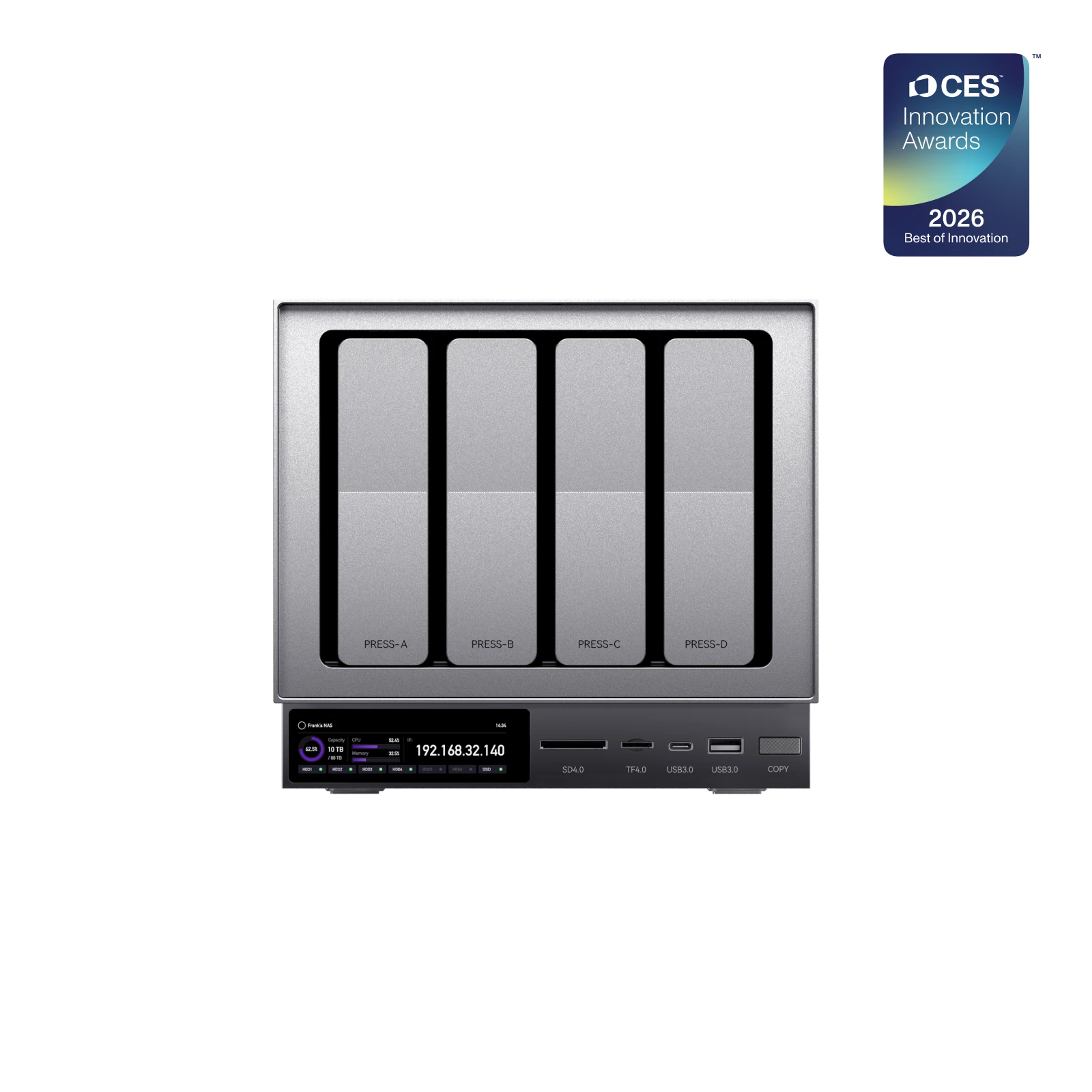
- D4 · 4 SATA bays
- Compare a four-drive layout against the current archive, expected growth and independent recovery copy. See the D4.
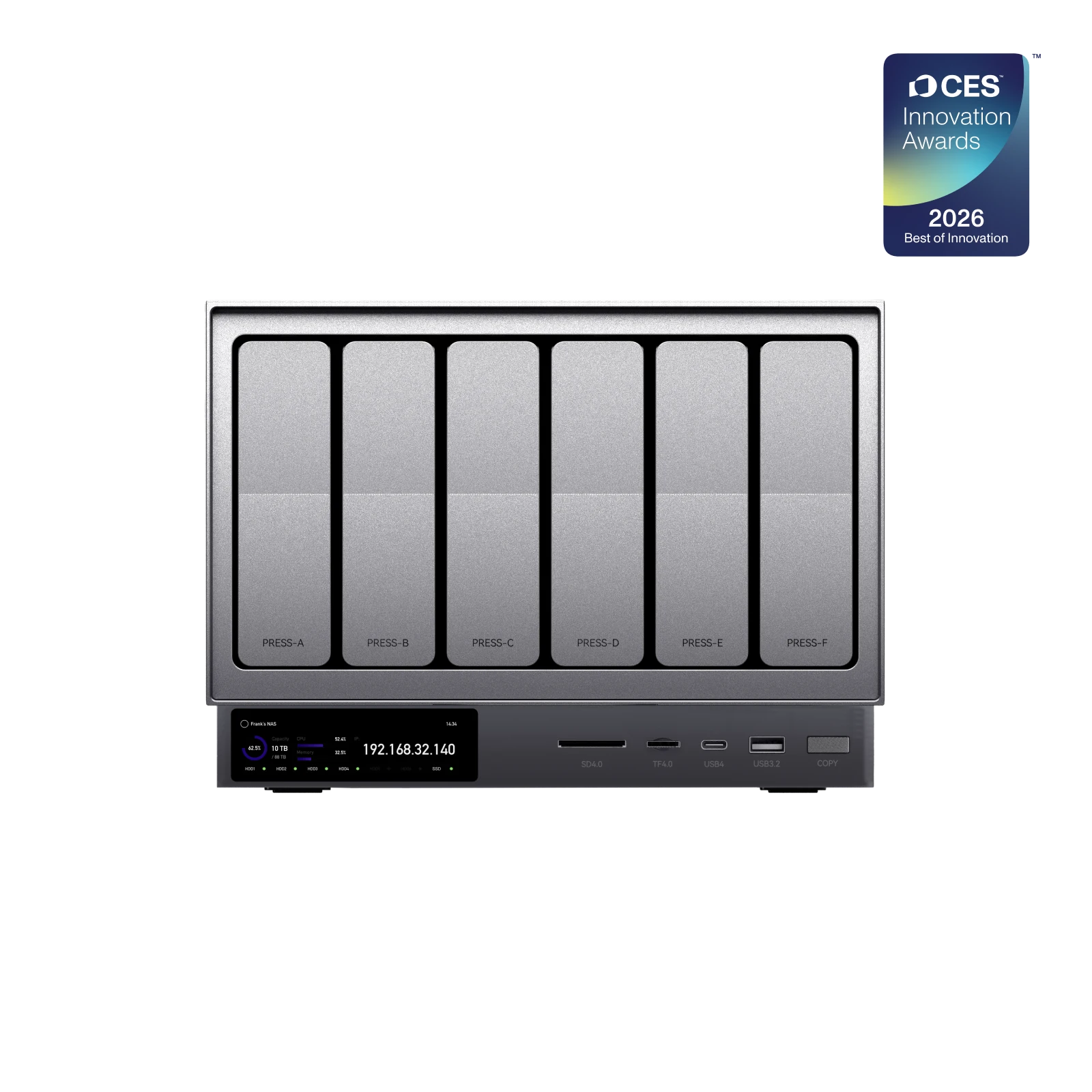
- D6 · 6 SATA bays
- Compare a six-drive layout when more drive-bay capacity or a different growth plan is useful. More bays do not establish a faster application or network. See the D6.
- 8GB / 16GB RAM
- These are separate SKU choices on each product page. Confirm the selected release’s requirements and combined operating load; no application-specific memory recommendation has been device-tested here.
- Complete system cost
- Enclosures are diskless. Allow for compatible drives, independent backup storage and any external application host, paid features or service/API charges required by the task. Current prices and delivery belong on the product page.
Official references
- KopiaUI repository, policies and passwordDocumentation read 2026-11-18
- Local Directory or NAS repositoryDocumentation read 2026-11-18
- Snapshot restore command and destinationDocumentation read 2026-11-18
For Home
NAS Backup and Restore: Prove You Can Recover
Read the guide
Backup & migration