


What you can do
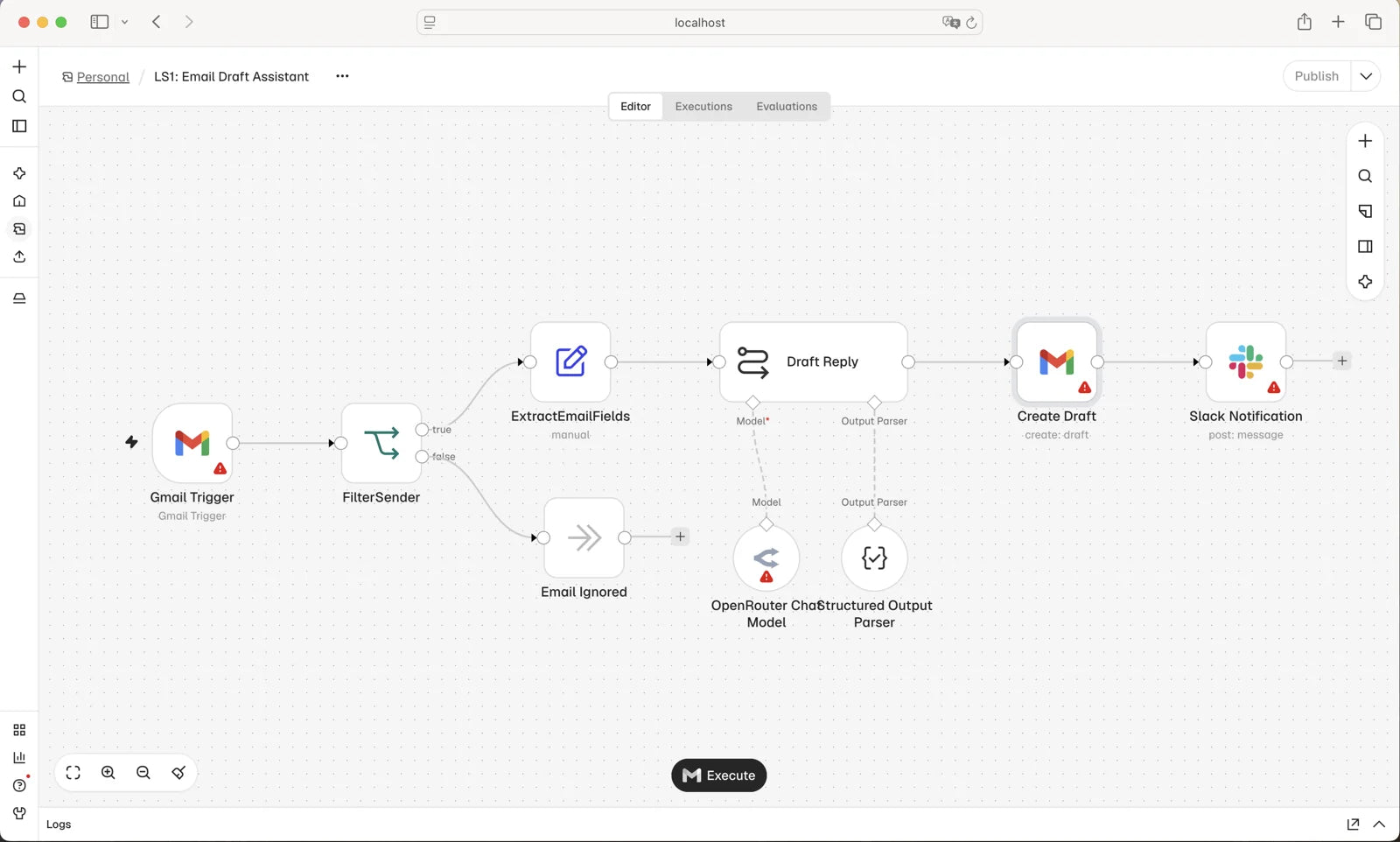
Connect service events into workflows whose results you can inspect.
Build a small automation whose input, transformed output and failures can be inspected before connecting valuable files or external accounts.
This is a third-party project, with its own host, release, maintenance and license conditions. Its features are separate from ZettOS native software.
App Center availability and installation route
Checked on 18 November 2026: Zettlab D6 · RK3588 · 16GB RAM · ZettOS 1.14.0. The complete App Center list showed 49 entries. This observation applies to that device and catalog snapshot.
Not observed in the checked App Center. This guide does not provide a confirmed one-click NAS installation. Check the manual or external-host arrangement below against the exact image, release, CPU architecture, runtime, resources and data requirements. Absence from this catalog does not establish that the application is unsupported.
Installation, application operation, hardware acceleration and recovery on this NAS remain untested. Official recommended Compose route.
Choose the host and data paths
- Guide arrangement
- Conditional ZettOS Docker Compose project for a small verified workflow; external host for unsupported images, nodes or resource needs.
- NAS role
- May host a compatible container and its supported local data paths after checking the exact image, runtime and resource requirements; use the stated external-host alternative when needed.
- Host requirements
- n8n persists workflow/credential state and a credential encryption key. Database copies without the same key cannot recover usable credentials.
- Device validation
- Not observed in checked App Center; reference deployment untested. Installation, hardware acceleration and recovery on a Zettlab device have not been tested.

Conditionally supported application host
Application-specific persistent data
Consistent state + independent backup
This application was not observed in the checked D6 / ZettOS 1.14.0 App Center. The manual or external-host reference below requires its own compatibility checks; this observation does not establish that it is unsupported.
For a separate supported project, ZettOS documents Docker → Projects → + Create and YAML paste/import. Manage App Center installations in App Center. Match the exact image, data paths, permissions and ports before deployment.
Before you start
- Choose a manual test workflow before webhooks or automatic schedules, and record the selected n8n release.
- Prepare /home/node/.n8n persistence on local storage for default SQLite. For the reviewed TLS Compose route, reserve the HTTPS domain plus proxy listeners; container port 5678 is an internal application endpoint, not a substitute for the configured browser URL.
- Set the time zone and preserve the generated encryption key or set N8N_ENCRYPTION_KEY once. Do not change it casually after credentials exist.
Set up and use the reference arrangement
-
Deploy and create the owner
Follow the reviewed release-matched n8n + Traefik TLS Compose route, preserving .n8n even with PostgreSQL. Open the configured https://subdomain.domain endpoint and create the owner. Inspect the resolved service list first: the newer docs-repository Assistant example adds privileged Docker-in-Docker and is not this basic NAS workflow.
-
Build a visible manual workflow
Add a Manual Trigger, an Edit Fields/Set node producing a sample filename and archive date, and a final transformation or HTTP Request to a test endpoint you control.
-
Inspect one successful execution
Run it manually, inspect the input/output at each node and confirm the expected record reaches the final node. Use dummy credentials for any test integration.
-
Create a controlled failure
Change the test endpoint or deliberately fail an input check. Observe the failed execution, configure the workflow’s error/retry behavior and rerun safely.
-
Add a NAS file task separately
If the intended workflow reads or writes NAS files, mount only its dedicated test folder and use a documented file node for the chosen version. Verify the path seen inside the container; host and container paths differ.
Check the first useful result
Keep the complete application state
- /home/node/.n8n, including the encryption key/config and default SQLite database.
- A native database backup if PostgreSQL is used.
- Configured binary/execution-data storage, custom nodes, Compose/environment and any mounted task data required for recovery.
Back up and bring it back
- For default SQLite, stop n8n cleanly before copying .n8n; otherwise coordinate a database-native dump with the user folder and external storage.
- Restore to a matching isolated instance with the same encryption key. Keep schedules/webhooks disabled or isolated while testing to avoid duplicate real actions.
- Open the restored workflow, check a dummy credential and run the manual test. CLI workflow/credential exports alone are not a complete instance backup.
Check limits and ongoing work
- Self-hosting requires application maintenance; some nodes call paid external APIs.
- For public webhooks use the release’s correct public-URL variable, TLS and authentication: the reviewed guide introduces N8N_WEBHOOK_URL from 2.30.0 and uses WEBHOOK_URL on older releases. Do not disable secure-cookie protection just to reach a raw LAN port.
- Community nodes and filesystem access need their own review. Assistant sandbox examples with privileged Docker-in-Docker require an isolated dedicated host/VM according to their own documentation and are outside this small manual workflow. Official branch and published-page examples currently differ; select one release-matched route.
Review release notes before updating. Keep the matching configuration and a consistent pre-update recovery set; a database migration may require restoring data with the matching software rather than simply using an older image.
Confirm the project’s current license and the exact free or paid feature boundaries for your intended task. Self-hosting does not make external APIs, cloud destinations or separate compute free.
Add NAS storage if needed
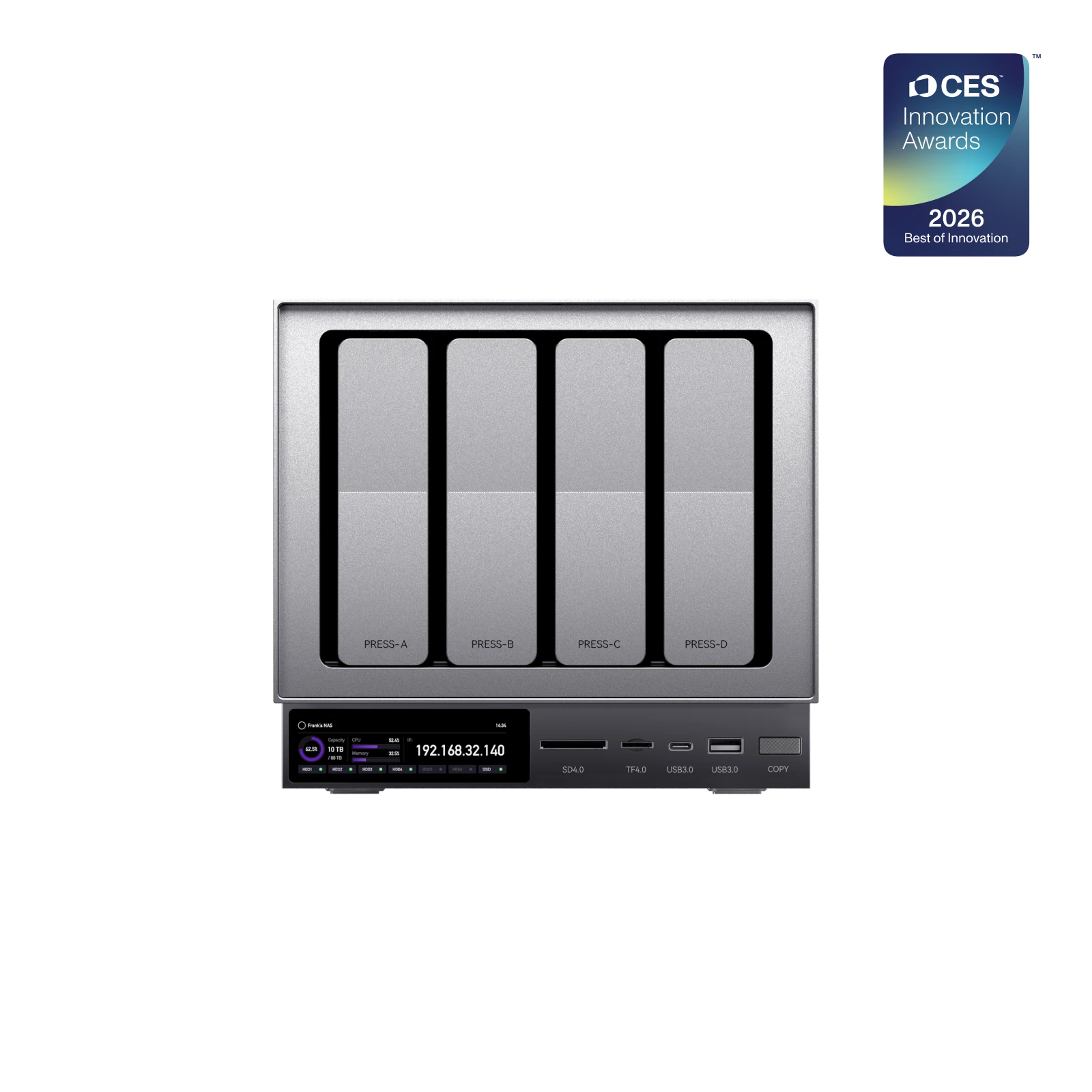
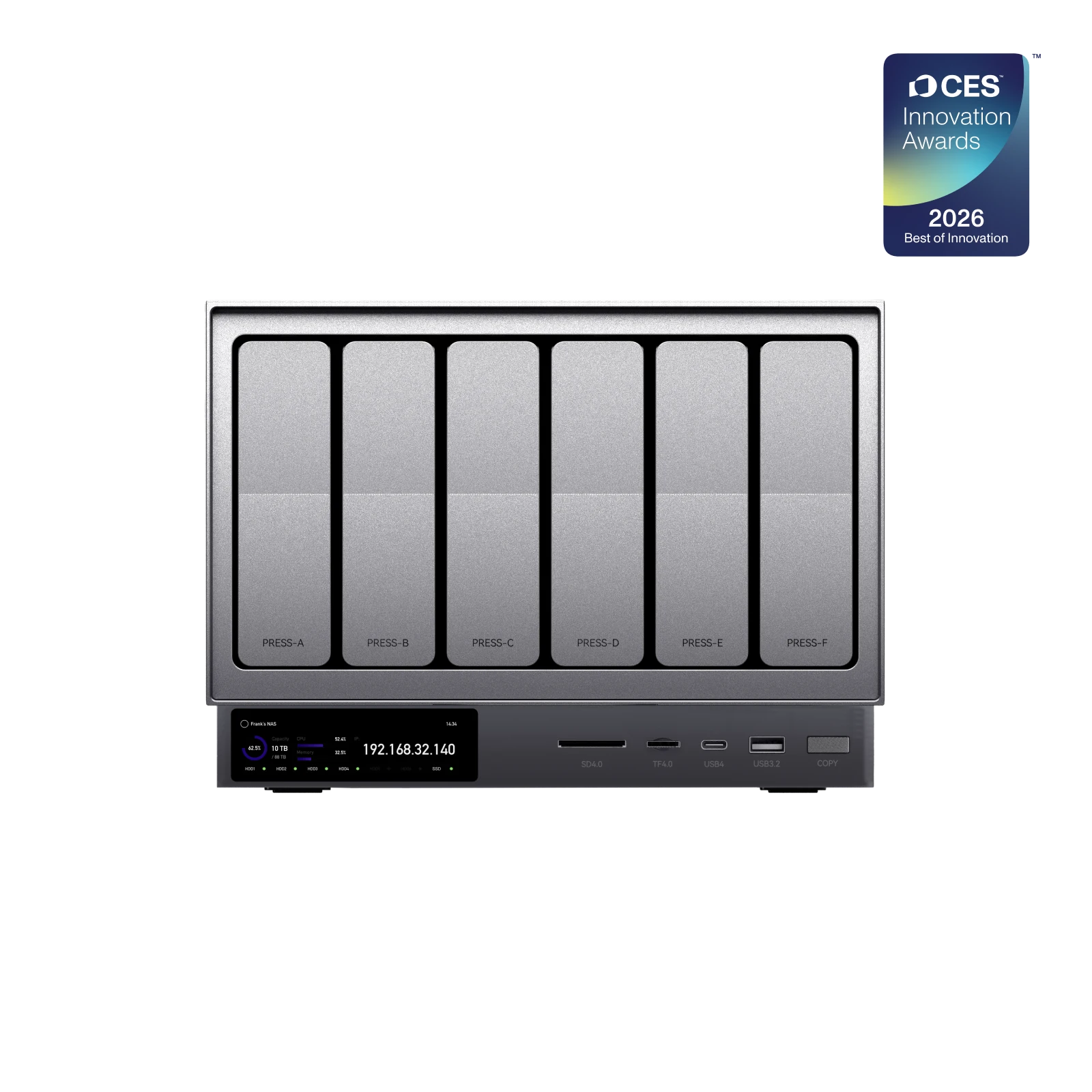
n8n does not itself require a multi-bay NAS. Choose D4 or D6 only if you also need shared file archives or independent backup destinations. Base drive bays on those files and their growth; application configuration and logs do not by themselves justify a larger enclosure. Check the supported service host and its resources separately.
- D4 · 4 SATA bays
- Compare a four-drive layout against the current archive, expected growth and independent recovery copy. See the D4.
- D6 · 6 SATA bays
- Compare a six-drive layout when more drive-bay capacity or a different growth plan is useful. More bays do not establish a faster application or network. See the D6.
- 8GB / 16GB RAM
- These are separate SKU choices on each product page. Confirm the selected release’s requirements and combined operating load; no application-specific memory recommendation has been device-tested here.
- Complete system cost
- Enclosures are diskless. Allow for compatible drives, independent backup storage and any external application host, paid features or service/API charges required by the task. Current prices and delivery belong on the product page.
Official references
- Official recommended Compose routeDocumentation read 2026-11-18
- Official credential encryption keyDocumentation read 2026-11-18
- Official complete backup and restoreDocumentation read 2026-11-18
- ZettOS Docker Projects
Development, alternative and historical reference context
These references describe another branch, database choice or older route. Use the selected release and deployment references above for this guide. Do not combine configurations from these alternatives with that arrangement.
- Official docs repository Compose branch, different scopeDocumentation read 2026-11-18
- Official docs repository legacy Docker page, explicitly outdatedDocumentation read 2026-11-18
For Home
Plan Useful Home Server Workflows
Read the guide
Basics