


What you can do
Reach NAS services privately through authorized devices and routes.
Reach a specific NAS service privately from an authorized device, and prove that revoking access actually removes that route.
This is a third-party project, with its own host, release, maintenance and license conditions. Its features are separate from ZettOS native software.

App Center availability and installation route
Checked on 18 November 2026: Zettlab D6 · RK3588 · 16GB RAM · ZettOS 1.14.0. The complete App Center list showed 49 entries. This observation applies to that device and catalog snapshot.
Not observed in the checked App Center. This guide does not provide a confirmed one-click NAS installation. Check the manual or external-host arrangement below against the exact image, release, CPU architecture, runtime, resources and data requirements. Absence from this catalog does not establish that the application is unsupported.
Installation, application operation, hardware acceleration and recovery on this NAS remain untested. Official subnet-router setup and route approval.
Choose the host and data paths
- Guide arrangement
- Supported clients / external subnet router
- NAS role
- Remain the service or storage destination reached through an authorized route; mounting a folder does not create a subnet router.
- Host requirements
- The reviewed Tailscale docs support subnet routing to devices that cannot run the client. A subnet router is a network function; mounting NAS folders into a Tailscale container does not provide it.
- Device validation
- Not observed in checked App Center; reference deployment untested. Installation, hardware acceleration and recovery on a Zettlab device have not been tested.

Authorized clients + subnet router
Selected NAS services
Route / access policy + separate data backup
This application was not observed in the checked D6 / ZettOS 1.14.0 App Center. The manual or external-host reference below requires its own compatibility checks; this observation does not establish that it is unsupported.
Before you start
- Choose two test devices, a Tailscale account and one NAS address/service port to allow.
- Select an always-on supported Linux host that can already reach the NAS; record its LAN subnet and avoid overlapping test networks.
- Prepare an explicit access policy, administrator recovery access and a plan to revoke a test device.
Set up and use the reference arrangement
-
Join the two controlled devices
Install supported Tailscale clients and authenticate them into the intended tailnet. Confirm both appear in the Machines console before routing NAS traffic.
-
Advertise only the intended route
On the selected Linux router, follow the official IP-forwarding requirements and advertise the actual NAS subnet or intended host route. Approve that route in the admin console or through a deliberate auto-approver rule.
-
Restrict service access
Add the required access policy for the destination and service; route approval and access-policy permission are separate. On Linux clients accept the route explicitly when needed with tailscale set --accept-routes. Do not assume tailnet membership alone grants only the intended service.
-
Connect from another network
From the authorized client on a different network, open the intended NAS service address and sign in through that service’s own account controls.
-
Revoke and reconnect deliberately
Remove or expire the test client/authorization and verify access stops. Re-enroll a replacement device using the documented identity/auth-key process rather than copying an active device identity.
Check the first useful result
Keep the complete application state
- Tailnet access policy and the documented approved-route configuration.
- Router deployment settings and securely managed client state if using Docker TS_STATE_DIR.
- Administrator recovery credentials and a device re-enrollment procedure; NAS data backups remain separate.
Back up and bring it back
- Save routing/policy configuration and ensure an administrator can recover the account independently.
- For a lost router or client, install on the replacement, re-authenticate or use an appropriate auth key, reapprove routes and revoke the lost device.
- Retest access and revocation. Do not duplicate a live node’s state onto a second simultaneously running client.
Check limits and ongoing work
- Tailscale access depends on identity, control-plane service and network conditions; it is not an offline file backup.
- Subnet routing and DNS require separate configuration.
- Docker sidecars are a separate reference route requiring a verified network design: kernel mode needs /dev/net/tun plus capabilities; userspace mode needs its documented proxy/Serve arrangement. Do not copy the reviewed nginx example as proof of remote service access: it lacks the network-sharing/proxy configuration asserted by its prose, and localhost on another client is that client.
Review release notes before updating. Keep the matching configuration and a consistent pre-update recovery set; a database migration may require restoring data with the matching software rather than simply using an older image.
Confirm the project’s current license and the exact free or paid feature boundaries for your intended task. Self-hosting does not make external APIs, cloud destinations or separate compute free.
Add NAS storage if needed
Tailscale does not itself require a multi-bay NAS. Choose D4 or D6 only if you also need shared file archives or independent backup destinations. Base drive bays on those files and their growth; application configuration and logs do not by themselves justify a larger enclosure. Check the supported service host and its resources separately.
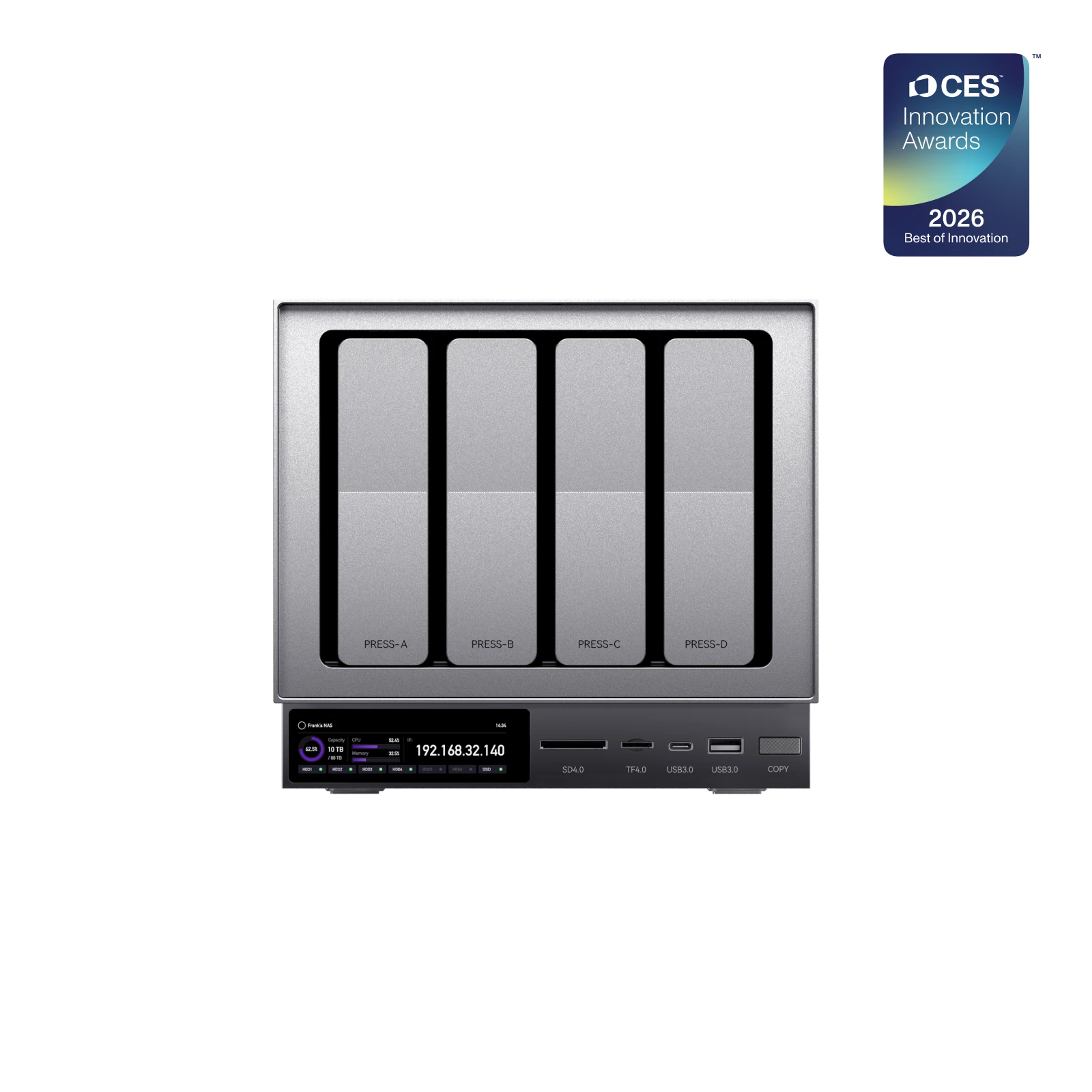
- D4 · 4 SATA bays
- Compare a four-drive layout against the current archive, expected growth and independent recovery copy. See the D4.
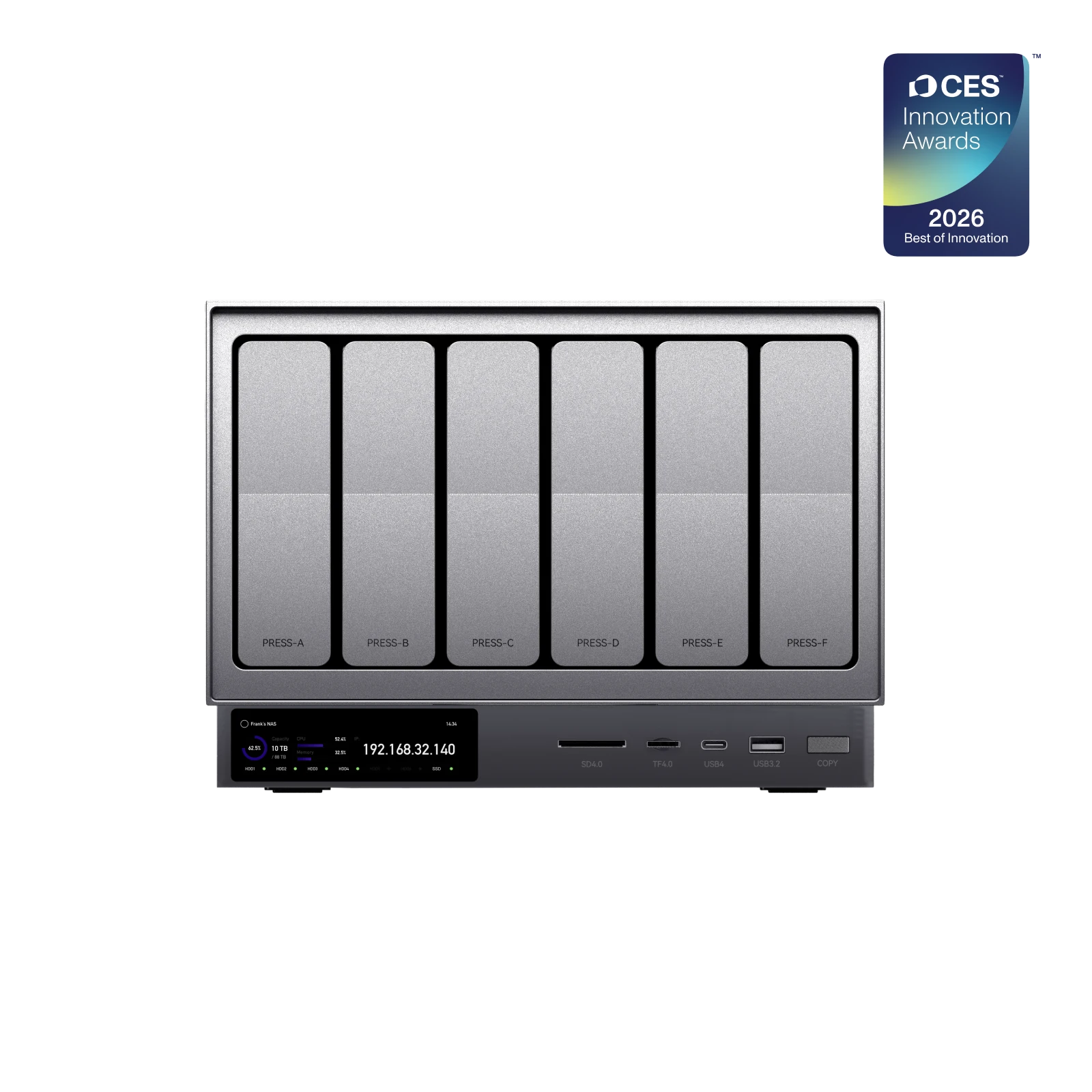
- D6 · 6 SATA bays
- Compare a six-drive layout when more drive-bay capacity or a different growth plan is useful. More bays do not establish a faster application or network. See the D6.
- 8GB / 16GB RAM
- These are separate SKU choices on each product page. Confirm the selected release’s requirements and combined operating load; no application-specific memory recommendation has been device-tested here.
- Complete system cost
- Enclosures are diskless. Allow for compatible drives, independent backup storage and any external application host, paid features or service/API charges required by the task. Current prices and delivery belong on the product page.
Official references
- Official tailnet setup and access controlsDocumentation read 2026-11-18
- Official subnet-router setup and route approvalDocumentation read 2026-11-18
- Official Docker Compose state and authenticationDocumentation read 2026-11-18
- Current official Docker Compose example, reviewed with limitationsDocumentation read 2026-11-18
- Current official Docker parametersDocumentation read 2026-11-18
For Home
Plan Useful Home Server Workflows
Read the guide
For Small Teams