


What you can do
Monitor services, receive alerts and find failures before the next visit.
Measure whether a service is reachable from the monitoring host and confirm that a real outage produces an observable incident.
This is a third-party project, with its own host, release, maintenance and license conditions. Its features are separate from ZettOS native software.
App Center availability and installation route
Checked on 18 November 2026: Zettlab D6 · RK3588 · 16GB RAM · ZettOS 1.14.0. The complete App Center list showed 49 entries. This observation applies to that device and catalog snapshot.
Not observed in the checked App Center. This guide does not provide a confirmed one-click NAS installation. Check the manual or external-host arrangement below against the exact image, release, CPU architecture, runtime, resources and data requirements. Absence from this catalog does not establish that the application is unsupported.
Installation, application operation, hardware acceleration and recovery on this NAS remain untested. Official installation and unsupported NFS storage.
Choose the host and data paths
- Guide arrangement
- Conditional ZettOS Docker project for local checks; separate host for monitoring NAS or whole-host availability.
- NAS role
- May host a compatible container and its supported local data paths after checking the exact image, runtime and resource requirements; use the stated external-host alternative when needed.
- Host requirements
- Official Docker instructions persist /app/data and explicitly exclude NFS-like filesystems. Keep its live database on local storage, even when backups go to NAS.
- Device validation
- Not observed in checked App Center; reference deployment untested. Installation, hardware acceleration and recovery on a Zettlab device have not been tested.

Conditionally supported application host
Application-specific persistent data
Consistent state + independent backup
This application was not observed in the checked D6 / ZettOS 1.14.0 App Center. The manual or external-host reference below requires its own compatibility checks; this observation does not establish that it is unsupported.
For a separate supported project, ZettOS documents Docker → Projects → + Create and YAML paste/import. Manage App Center installations in App Center. Match the exact image, data paths, permissions and ports before deployment.
Before you start
- Choose one noncritical HTTP endpoint and a monitoring location that reflects the user’s access path.
- Prepare a local persistent /app/data volume and an available host port mapped to 3001.
- Choose a supported notification provider only if needed; keep its credentials private.
Set up and use the reference arrangement
-
Deploy the official service
Use the upstream Uptime Kuma 2 Compose or Docker route with a recorded compatible 2.x release/digest and the local persistent data volume. The public :2 tag is mutable. Inspect startup logs and open the mapped 3001 address.
-
Create a monitor with a meaningful test
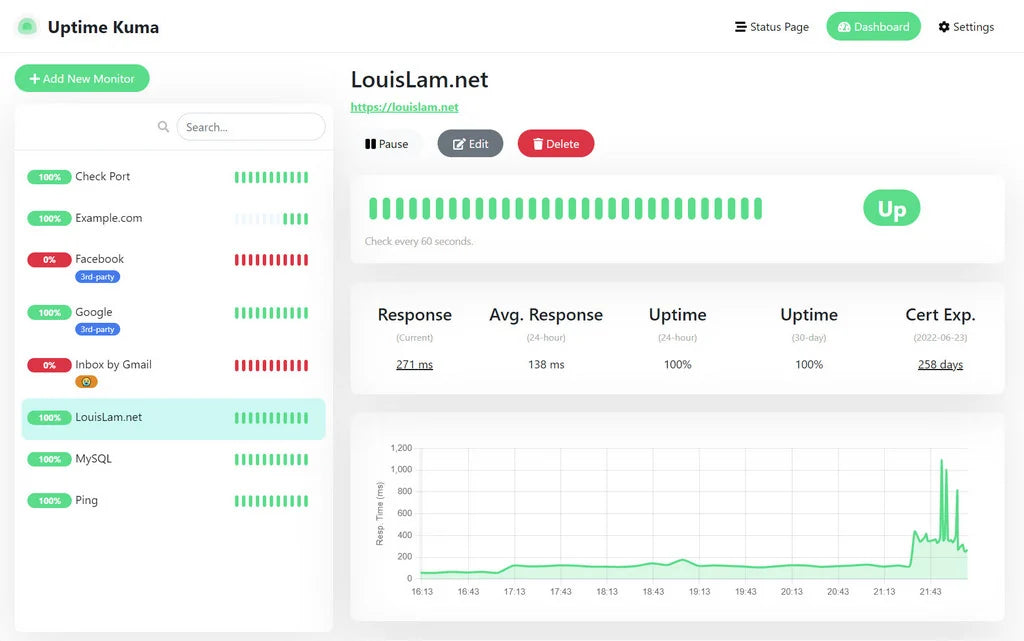
Create the administrator, add an HTTP(s) monitor for the chosen endpoint, select a reasonable interval and confirm it reaches Up.
-
Generate a known incident
Stop only the test endpoint or deliberately change its test URL. Wait through the configured interval and retries; check the Down event and any configured notification.
-
Recover and annotate the result
Restore the endpoint, confirm a recovery event, then restart Kuma and confirm the monitor and history survive.
Check the first useful result
Keep the complete application state
- The entire local /app/data volume, including the application database.
- Compose/image version and notification delivery requirements.
- An independent backup outside the monitoring host.
Back up and bring it back
- For this small recovery exercise, stop Kuma cleanly and copy the complete local data volume to an independent location.
- Restore it into a fresh local volume using the recorded compatible version; do not use an NFS share as the live database directory.
- Open the restored dashboard, verify the monitor/history, and test notification delivery again.
Check limits and ongoing work
- A monitor on the same NAS cannot report while that entire NAS is down; use a separate host for that coverage.
- HTTP success alone may only show a login page, not a working application transaction.
- Copying a live SQLite file without a consistent method is not the recovery plan described here.
Review release notes before updating. Keep the matching configuration and a consistent pre-update recovery set; a database migration may require restoring data with the matching software rather than simply using an older image.
Confirm the project’s current license and the exact free or paid feature boundaries for your intended task. Self-hosting does not make external APIs, cloud destinations or separate compute free.
Add NAS storage if needed
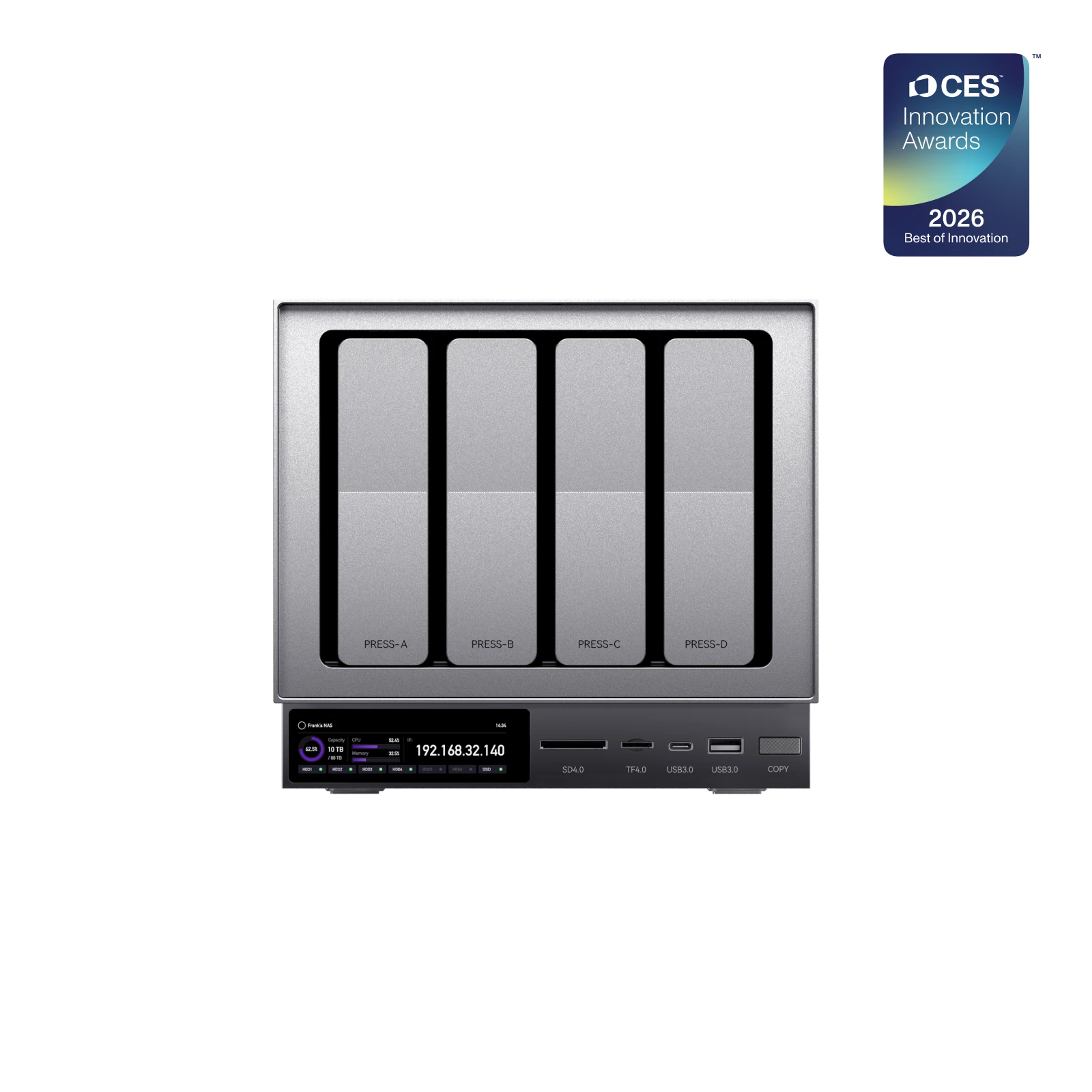
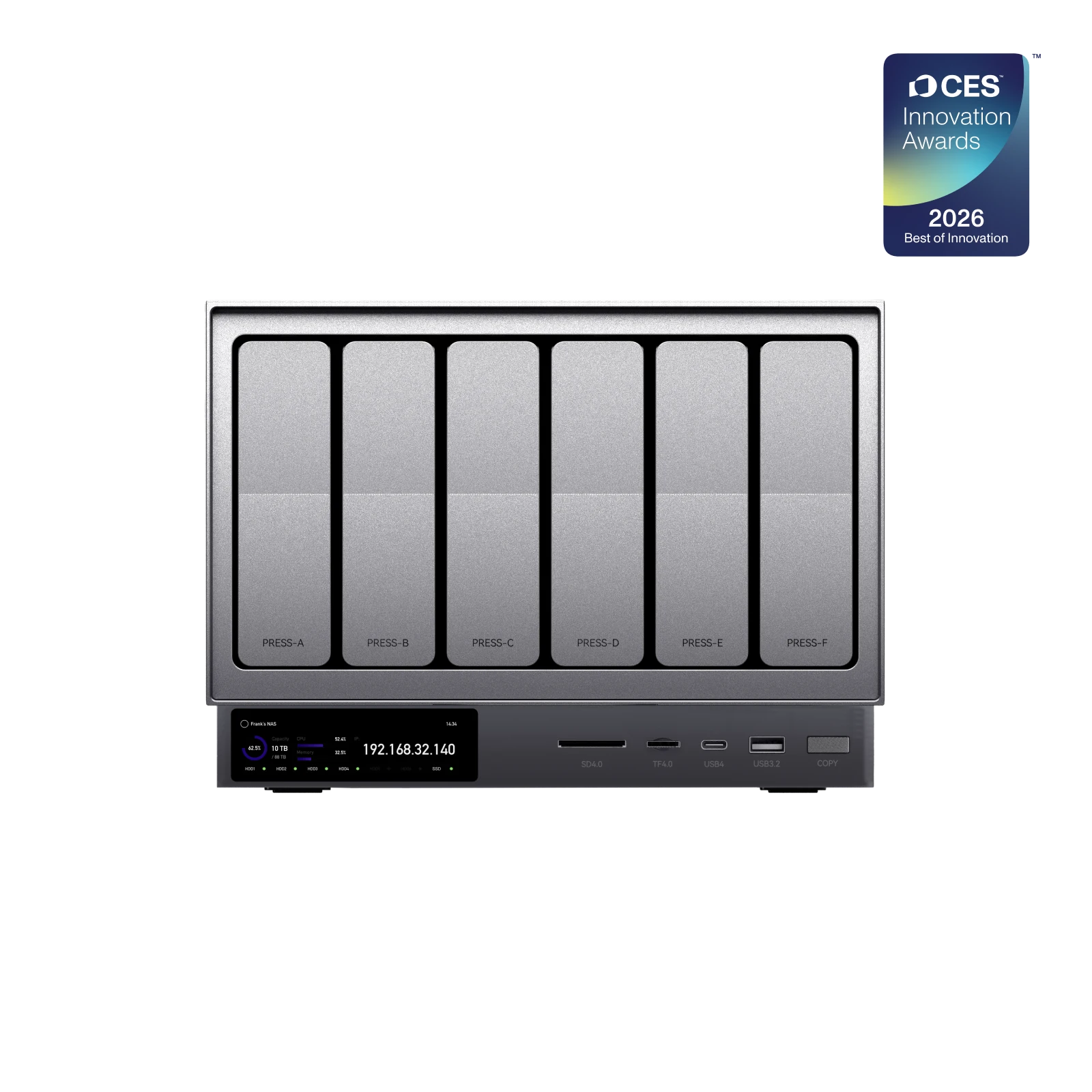
Uptime Kuma does not itself require a multi-bay NAS. Choose D4 or D6 only if you also need shared file archives or independent backup destinations. Base drive bays on those files and their growth; application configuration and logs do not by themselves justify a larger enclosure. Check the supported service host and its resources separately.
- D4 · 4 SATA bays
- Compare a four-drive layout against the current archive, expected growth and independent recovery copy. See the D4.
- D6 · 6 SATA bays
- Compare a six-drive layout when more drive-bay capacity or a different growth plan is useful. More bays do not establish a faster application or network. See the D6.
- 8GB / 16GB RAM
- These are separate SKU choices on each product page. Confirm the selected release’s requirements and combined operating load; no application-specific memory recommendation has been device-tested here.
- Complete system cost
- Enclosures are diskless. Allow for compatible drives, independent backup storage and any external application host, paid features or service/API charges required by the task. Current prices and delivery belong on the product page.
Official references
- Official installation and unsupported NFS storageDocumentation read 2026-11-18
- Official Compose definitionDocumentation read 2026-11-18
- Official update procedureDocumentation read 2026-11-18
- ZettOS Docker Projects
For Home
Plan Useful Home Server Workflows
Read the guide
Basics