


What you can do
Build a family photo and video library with an ongoing upload, search and sharing routine.
Turn a verified collection of original photos and videos into a browsable family library. Begin with a controlled web upload, then prove that the database and originals recover together.
This is a third-party project, with its own host, release, maintenance and license conditions. Its features are separate from ZettOS native software.
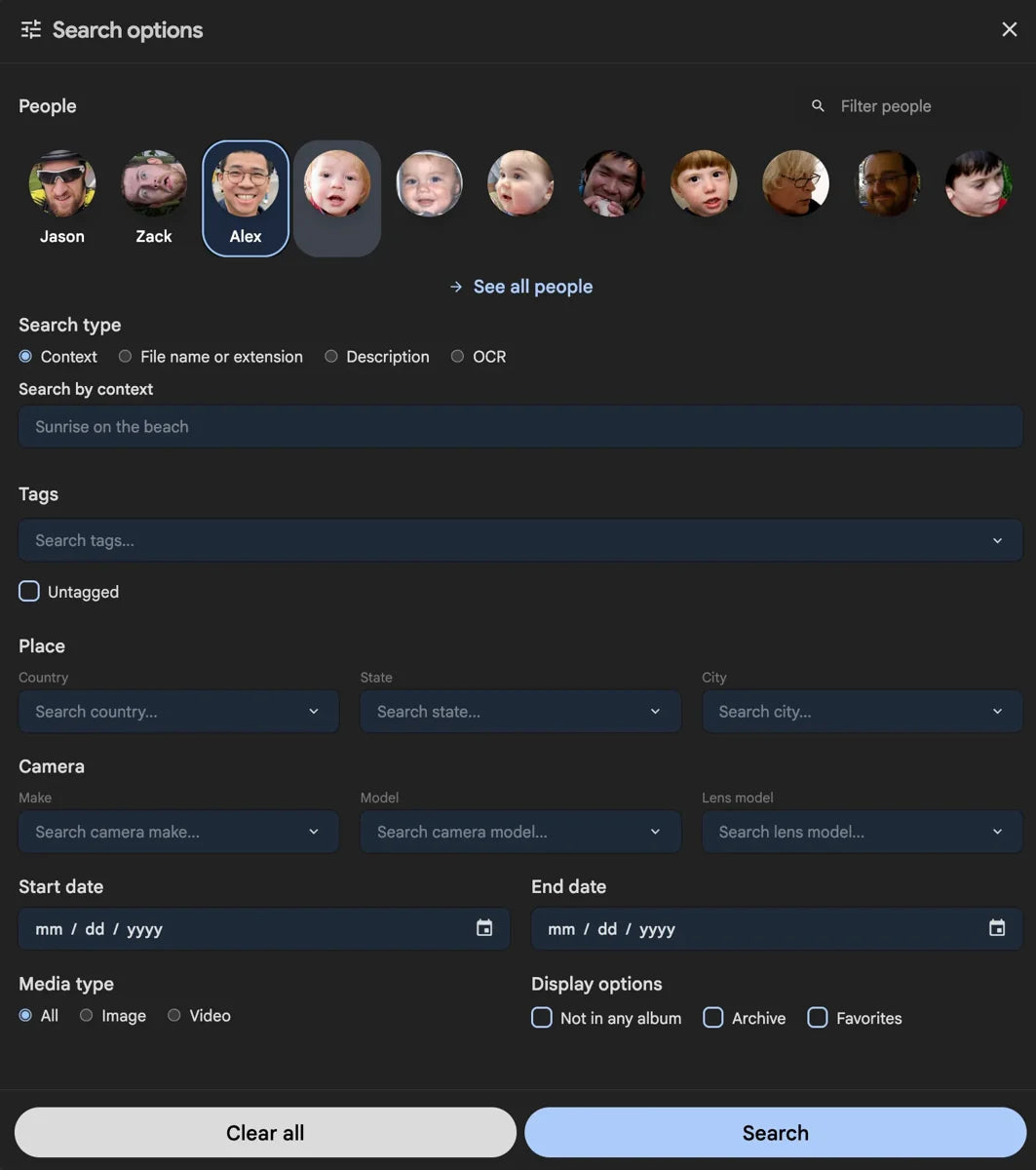
App Center availability and installation route
Checked on 18 November 2026: Zettlab D6 · RK3588 · 16GB RAM · ZettOS 1.14.0. The complete App Center list showed 49 entries. This observation applies to that device and catalog snapshot.
Available in the checked App Center. The displayed tag and port describe the store package. They do not establish a running version or a tested connection.
- App Center
- Listed
- Observed package state
- Install action shown; offered for installation
- Displayed version / tag
- release
- Displayed service port
- 2283
Use the App Center package
- Open App Center and select the exact application. Review that package’s release, resource requirements, service port and data location before installation or enablement.
- Use the package action only after checking storage, permissions and the application’s instructions. Open it through the actual service address shown by your device; do not substitute an upstream default port.
- Complete the first useful task and a separate recovery trial before relying on the service. These actions were not performed during the read-only catalog check.
The reference host, diagram and setup steps that follow describe a separate upstream route. Do not paste its Compose configuration, paths or environment variables into an App Center package. Some displayed packages are older than current upstream instructions; match the package release before applying version-specific steps.
Installation, application operation, hardware acceleration and recovery on this NAS remain untested.
Choose the host and data paths
- Guide arrangement
- External Linux host + NAS media
- NAS role
- Provide the selected media location mounted on the Linux host. Keep the Immich database on that host’s local SSD and recover both database and media together.
- Host requirements
- The current official requirements include amd64/arm64 and a minimum of 6GB RAM, with 8GB recommended. This guide prefers an external Linux host with a local SSD database. A NAS-local deployment is conditional on the exact release, Docker/Compose and available resources; ARM64 support alone is insufficient. For an external amd64 host, Immich v3 machine learning additionally requires x86-64-v2; ARM64 support does not remove that separate amd64 requirement.
- Device validation
- App Center listing checked; installation untested. Installation, hardware acceleration and recovery on a Zettlab device have not been tested.

Supported external application host
NAS files / deliberate backup target
Application state + independent copy
App Center lists this application on the checked D6 / ZettOS 1.14.0. Use App Center for that package; the reference arrangement below follows upstream documentation and is a separate route. Installation, operation and recovery were not tested.
Before you start
- Reserve a supported Linux host and local SSD for PostgreSQL; do not put DB_DATA_LOCATION on SMB/NFS or any other network share.
- Prepare a dedicated NAS media share, a limited account and a stable host mount. Verify read/write ownership and a startup guard that prevents writes into an unmounted empty directory.
- Keep 10–20 non-sensitive originals on the computer, including a video and photos with known dates. Record the chosen Immich release and use its matching files.
Set up and use the reference arrangement
-
Download a matched release
Obtain the official release docker-compose.yml and example.env, save the latter as .env, and keep both in one project directory. Set UPLOAD_LOCATION to the validated NAS mount and DB_DATA_LOCATION to the local SSD; set a new database password using the release-documented characters (the current example recommends A–Z, a–z and 0–9), and pin IMMICH_VERSION to the chosen release.
-
Start on the selected host
Use Docker Compose on the Linux host and inspect service logs. If deliberately adapting this to a validated NAS-local runtime, use the documented ZettOS Docker Projects import flow, keep .env beside the project and confirm that every bind mount resolves to the intended storage. Do not omit release-required services.
-
Create the library
Open the server URL/port specified by that release, create the initial administrator and upload the sample through the web UI. Let jobs finish; open originals, play audio in the video and check dates and orientation.
-
Plan phone use separately
After the web sample and restore pass, create appropriate household accounts and test the mobile app under the actual operating system, battery and background settings. A thumbnail or one completed upload does not establish continuous backup.
Check the first useful result
Keep the complete application state
- All of UPLOAD_LOCATION, including uploaded originals and profiles; automatic database backups inside it are not an independent copy.
- A release-compatible, application-consistent database backup; the required .env/Compose definition and protected credentials.
- External-library originals, if later used, at their separately recorded paths.
Back up and bring it back
- Stop writes with the documented procedure before coordinating the database and media backup; copy the recovery set to an independent destination.
- Create an isolated compatible instance, restore media paths and the database with that release’s instructions. Current docs offer Administration > Maintenance > Restore database backup; older releases may differ.
- Open the test album and compare downloaded originals and metadata against the retained sample before changing or deleting any source.
Check limits and ongoing work
- Never place PostgreSQL data on a network share. Preserve release-specific database dependencies.
- NAS NPU/GPU acceleration, ZettOS integration and background phone-upload continuity were not validated.
- The application does not perform the independent filesystem backup for you.
Review release notes before updating. Keep the matching configuration and a consistent pre-update recovery set; a database migration may require restoring data with the matching software rather than simply using an older image.
Confirm the project’s current license and the exact free or paid feature boundaries for your intended task. Self-hosting does not make external APIs, cloud destinations or separate compute free.
Choose your NAS configuration
Choose D4 or D6 by storage capacity, growth and independent-copy needs. The external application host is a separate requirement; selecting 16GB NAS RAM does not supply that host.
- D4 · 4 SATA bays
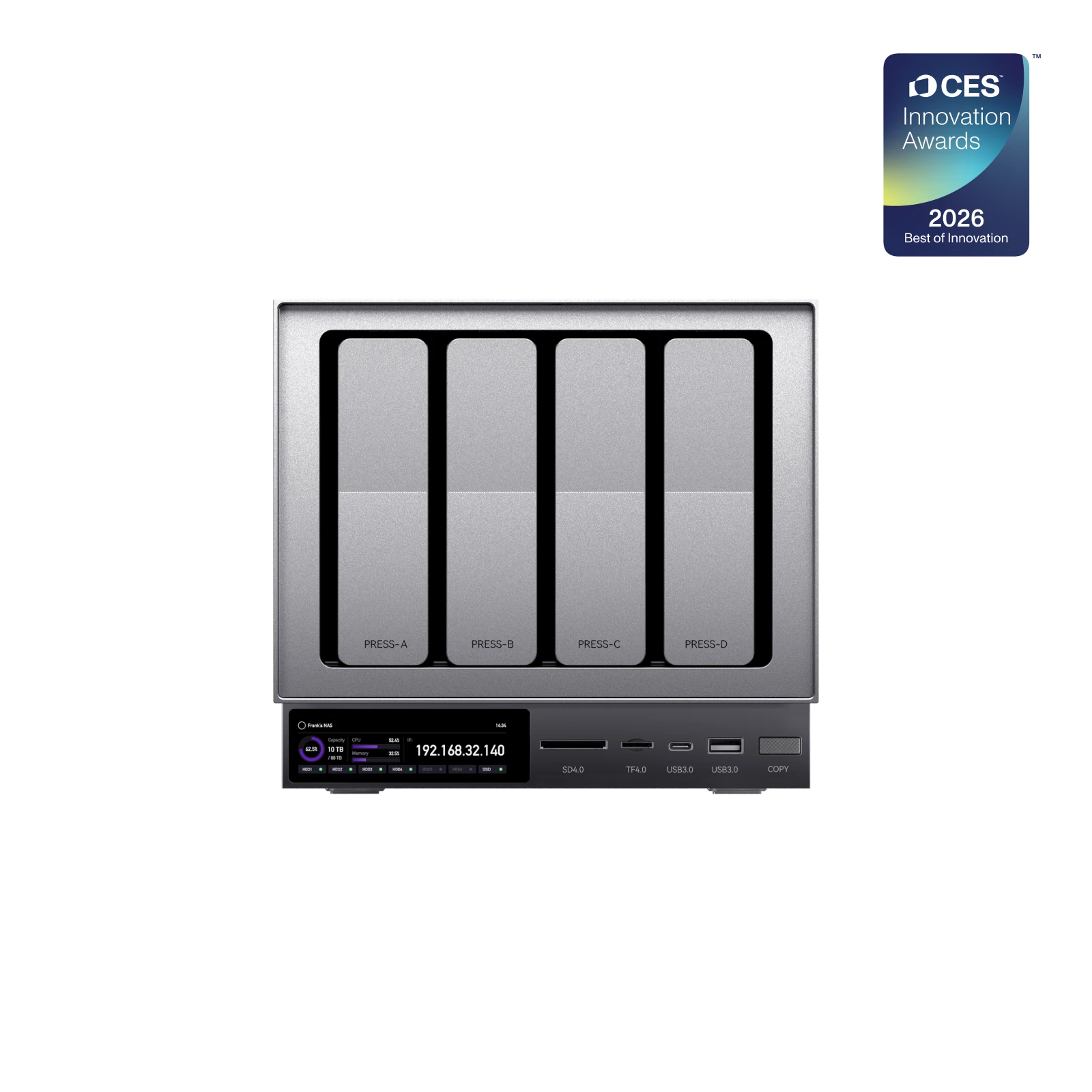
- Compare a four-drive layout against the current archive, expected growth and independent recovery copy. See the D4.
- D6 · 6 SATA bays
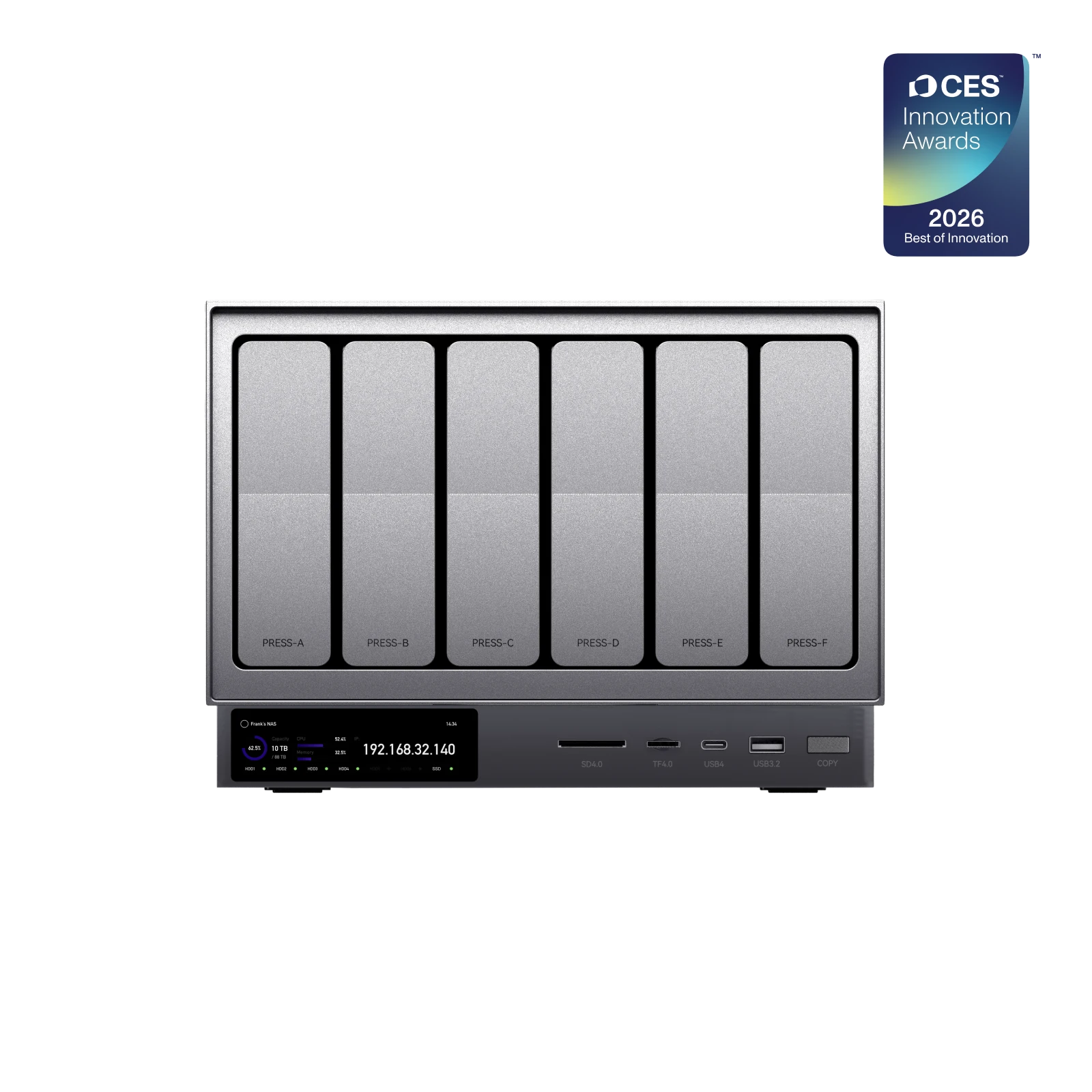
- Compare a six-drive layout when more drive-bay capacity or a different growth plan is useful. More bays do not establish a faster application or network. See the D6.
- 8GB / 16GB RAM
- These are separate SKU choices on each product page. Confirm the selected release’s requirements and combined operating load; no application-specific memory recommendation has been device-tested here.
- Complete system cost
- Enclosures are diskless. Allow for compatible drives, independent backup storage and any external application host, paid features or service/API charges required by the task. Current prices and delivery belong on the product page.
Official references
- Immich hardware and database requirementsDocumentation read 2026-11-18
- Release Compose and environment setupDocumentation read 2026-11-18
- Complete media and database backupDocumentation read 2026-11-18
- First web uploadDocumentation read 2026-11-18
- ZettOS App Center installation
- ZettOS Docker Projects
For Home
Immich with NAS: A Reference Import and Restore Workflow
Read the guide
For Home